
You've got a list of people who bought from you before, applied for something, or asked a question six months ago. Someone on your team says you don't need fresh opt-in to text them a new offer -- "they're already a customer, we have a relationship." Is that actually true, or is it the kind of thing that sounds right until a plaintiff's firm tests it?
The honest answer is: it depends entirely on which law you're standing under, and a Florida court just spent several pages showing how thin that ground can get even when the relationship is real.
What "Established Business Relationship" Actually Means
"Established business relationship" (EBR) is a term of art that predates text messaging. It comes from the Do Not Call rules -- the idea that a company could still place a live sales call to someone on the National DNC Registry if that person had bought something from the company, or asked about buying something, recently enough that the call wasn't really "cold." Congress and the FCC treated an EBR as evidence the consumer expected to hear from the business.
That concept never disappeared. What changed is which channels it covers.
The Federal TCPA Answer: EBR Doesn't Cover Marketing Texts
Under the FCC's own rules, an EBR is not a substitute for consent when the channel is an autodialed or prerecorded call or text. 47 CFR 64.1200(a)(2) requires "prior express written consent of the called party" before you can send any call or text that "includes or introduces an advertisement or constitutes telemarketing" using an automatic telephone dialing system, to any number on a list that explicitly includes cellular service in 64.1200(a)(1)(iii). The rule defines a "call" to include an SMS text message directly in 64.1200(a)(9).
"Prior express written consent" has its own definition under 64.1200(f)(9): a signed writing that clearly authorizes the sender to deliver ads or telemarketing to a specific number using an autodialer. Having sold someone a product last year isn't that. Having their number in your CRM because they filled out a form isn't that, unless the form itself did the work of getting written, specific consent to text marketing.
So under the federal TCPA, the EBR concept that survives is narrow: it can matter for live, human-dialed calls to numbers on the DNC list. It does almost nothing for you if you're sending a marketing text through any kind of automated platform, which is what "SMS marketing" means in practice for almost every operator reading this.
Where EBR Actually Does Work: State "Mini-TCPA" Laws
 The federal picture isn't the whole picture. A number of states have passed their own telemarketing statutes -- sometimes called "mini-TCPAs" -- that regulate calls and texts on top of the federal law, and some of them build EBR into the statute itself rather than treating it as a DNC-only carveout.
Florida is the clearest example. The Florida Telephone Solicitation Act (FTSA) defines a "telephonic sales call" to explicitly include a text message, at Fla. Stat. § 501.059(1)(j). But the statute's restrictions apply only to unsolicited telephonic sales calls, and § 501.059(1)(k) excludes calls and texts made to a person the solicitor already has "a prior or existing business relationship" with. Florida's administrative code spells out what that means in practice: a relationship formed by a purchase or transaction within the preceding 18 months, or an inquiry or application within the preceding 3 months -- as long as neither side has since terminated it.
Texas has its own version with different rules and its own quirks, and other states have followed the same pattern of layering state-specific telemarketing law on top of the TCPA -- see Kelley Drye's rundown of the Texas statute for a sense of how much these state laws diverge from each other and from the federal baseline. The upshot: EBR as a text-marketing defense is a patchwork of individual state statutes, not a national rule, and you have to check the specific state law covering the number you're texting.
The Fine Print Just Got Tested
Even where an EBR exemption genuinely exists on paper, courts aren't taking a defendant's word that one applied. On August 11, 2026, a federal judge in the Middle District of Florida let an FTSA claim move forward in Specht v. Lee Health System, despite the defendant's argument that the plaintiff was a patient with an obvious existing relationship to the healthcare system.
The problem wasn't that the relationship didn't exist. It was that the record didn't yet establish two things the court said mattered: which specific defendant entity actually placed the calls, and whether the plaintiff could reasonably have expected an EBR with one entity to extend to its affiliates. The court also didn't accept, at this stage, that the plaintiff's alleged instruction not to be contacted automatically killed the relationship -- but it didn't reject that argument either. It just said there wasn't enough on the record to decide, so the case survives to discovery.
That's the pattern worth taking away: an EBR defense doesn't win on the pleadings just because a relationship plausibly exists. A court wants to know which legal entity holds the relationship, how it's documented, and whether it's still alive on the date of the message.
What "Provable" EBR Actually Requires
 If you're going to rely on an EBR exemption under a state statute like Florida's, treat it the way you'd treat any other affirmative defense: build the record before you need it, not after you're served.
That means keeping, per contact: the date of the actual purchase, transaction, inquiry, or application that created the relationship; which of your legal entities the customer transacted with, if you operate under more than one; and whether the customer has since asked you to stop, which most mini-TCPA statutes and the TCPA itself treat as ending the relationship regardless of how recent the underlying transaction was. A purchase from 17 months ago that you can't actually date, or a relationship held by an entity that isn't the one sending the text, doesn't help you in front of a judge -- it's just a claim as unverified as no relationship at all.
None of this is a substitute for consent where consent is what the law actually requires. EBR is a narrow exception, not a general license to skip opt-in because someone's in your database.
Where This Leaves Operators Texting Past Customers
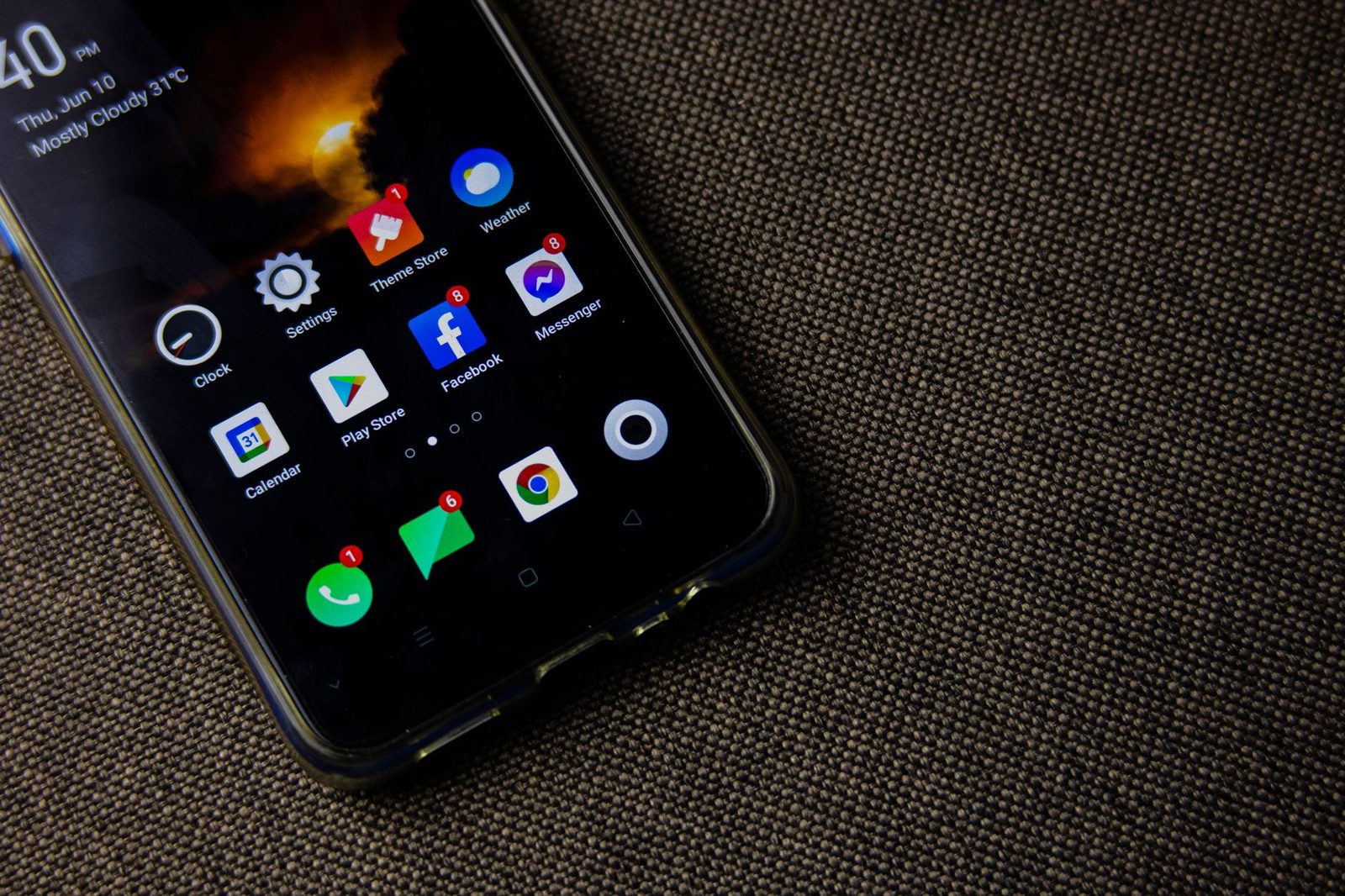 This whole question is about who you're allowed to text without fresh consent, and it's completely separate from how the message gets there. That second question is a carrier problem: A2P 10DLC, the industry messaging principles and registration regime the major aggregators operate under, blocks or throttles entire industries -- debt collection, lending, cannabis, and others -- based on what kind of business is sending, independent of whether any individual message is legally compliant.
Android Texter routes messages as person-to-person SMS from a real Android handset instead of through an aggregator's registered campaign, so it isn't subject to that carrier-level industry gating. That solves the deliverability problem. It does not solve, and was never meant to solve, the consent problem described in this article. Whether an EBR exemption applies to a given number, in a given state, is exactly as much your responsibility on Android Texter as it would be on any other platform -- the channel being open doesn't change who the law says can be texted.
Frequently Asked Questions
Does having a customer's phone number in my CRM count as an established business relationship?
Not by itself. Under Florida's FTSA, the relationship has to trace to an actual purchase, transaction, inquiry, or application within a defined window (18 months for purchases, 3 months for inquiries), and it can't have been terminated. Having a number on file isn't the same as documenting when and how the relationship formed.
Does the federal TCPA have an established business relationship exemption for texts?
No, not for marketing texts sent through an autodialer. 47 CFR 64.1200(a)(2) requires prior express written consent for that traffic regardless of any prior relationship. EBR only meaningfully survives for live, human-dialed calls to numbers on the National DNC Registry.
If a customer asked to stop receiving calls, does that also end an established business relationship for texts?
Courts haven't settled this cleanly. In Specht v. Lee Health, the court declined to decide whether an alleged instruction not to be contacted automatically terminated the relationship -- it said the record needed more development. Treat any stop request as ending the relationship for safety, rather than betting on the opposite reading in litigation.
Do multi-entity businesses need separate EBR records for each entity?
Based on the reasoning in Specht, yes. The court flagged that a relationship with one entity doesn't automatically extend to its affiliates. If you operate under multiple legal entities, document which one actually transacted with the customer, since that's the entity the exemption attaches to.
Does using Android Texter change whether I need consent to text someone?
No. Android Texter changes how a message reaches the carrier network, not whether the recipient has consented or qualifies for an exemption under state or federal law. TCPA and state mini-TCPA consent requirements apply the same way regardless of platform.
Ready to Text From a Number That Isn't Carrier-Gated?
Getting the consent question right is on you no matter what you send from. But if your industry gets blocked or throttled at the aggregator level before your compliant messages ever have a chance to land, Android Texter routes through a real Android phone instead of a registered A2P campaign -- so the messages you've already done the consent work for actually get delivered.