
You built a legitimate credit repair business. You want to text a client that their dispute letter went out, or that a collection account just dropped off their report. You go to set up SMS through Twilio, MessageBird, or whatever aggregator your CRM plugs into, and the campaign gets rejected before you send a single message. Not throttled. Not flagged for review. Rejected, permanently, with no path to appeal.
That's not a mistake in your paperwork. Credit repair is one of a small number of categories that major carriers block outright, regardless of consent, regardless of content, regardless of how clean your operation is. And this month gave the industry a reminder of why the ban exists: on August 10, 2026, the FTC obtained a court order halting Credit Glory, a network of 17 companies accused of taking consumers for close to $200 million.
This piece covers three things: what the FTC actually alleges in that case, why carriers block the entire credit repair category rather than policing bad actors individually, and what a legitimate operator can do to text clients without stepping on either the carriers' rules or the law that specifically governs your industry.
What the FTC alleges against Credit Glory
According to the FTC's complaint, Credit Glory and its affiliated entities ran a credit repair operation since at least 2016 that bought Google search ads designed to intercept consumers searching for information about debts they owed to specific creditors, including military lenders like the Army & Air Force Exchange Service and USAA. When those consumers called the numbers in the ads, they allegedly reached telemarketers posing as the actual debt collectors or creditors, who then steered them into credit repair services with illegal upfront fees and recurring charges billed without proper authorization.
The complaint names violations of six federal statutes: the FTC Act, the Credit Repair Organizations Act, the Telemarketing Sales Rule, the Gramm-Leach-Bliley Act, the Restore Online Shoppers' Confidence Act, and the Electronic Fund Transfer Act. A federal court granted the FTC's request for a temporary halt to the operation on August 10.
Two things about that fact pattern matter for anyone running a real credit repair business: the fee structure and the impersonation. Both map directly onto rules that apply to your business whether you're texting, calling, or mailing a letter, and one of them is the specific reason carriers won't touch this vertical.
Why carriers block the whole category, not just bad actors
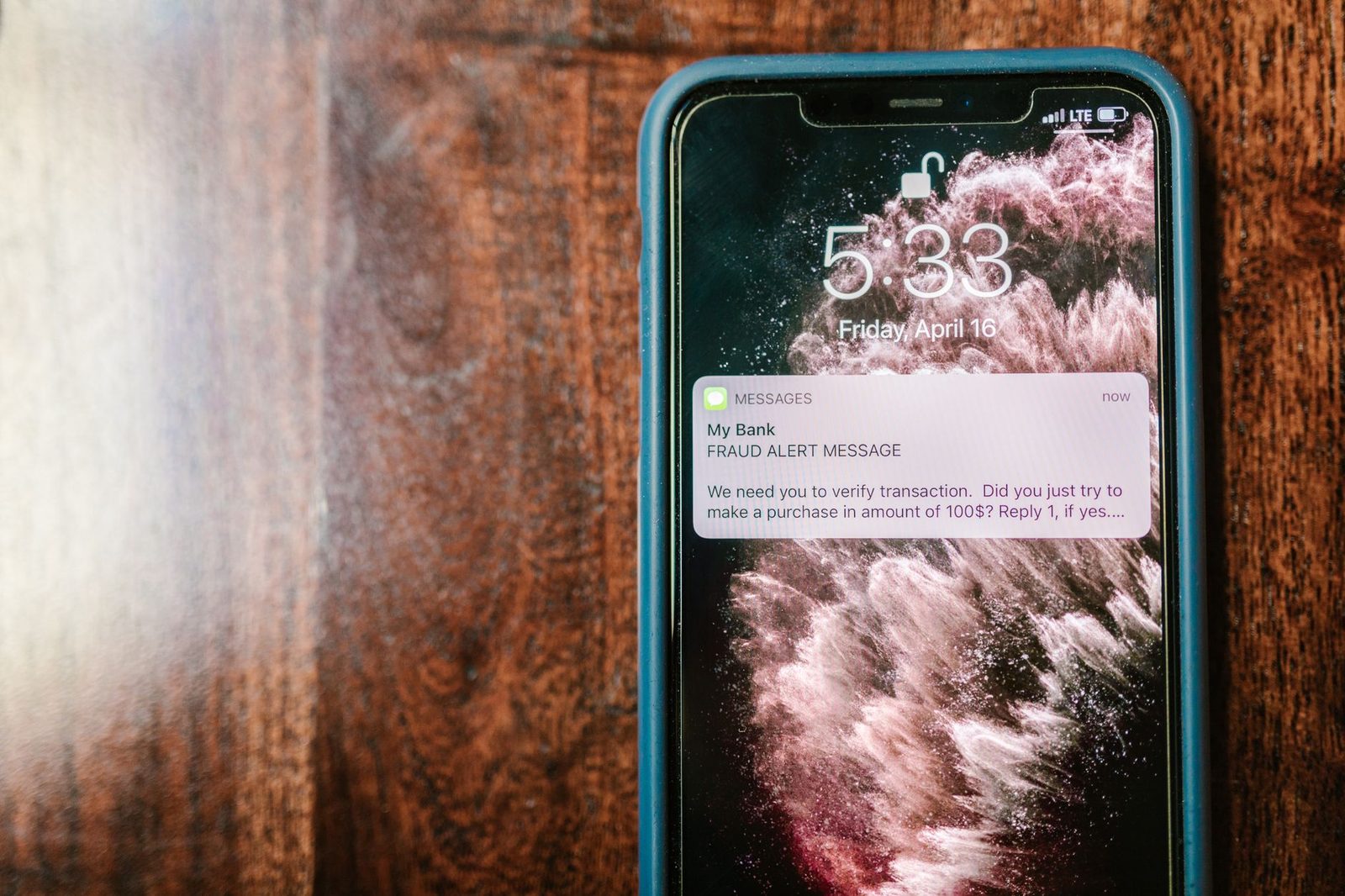 Carriers and aggregators don't try to distinguish a compliant credit repair shop from a scheme like the one described above. They block the category. Twilio's own error documentation is explicit about this: error 30467 triggers when "the business, use case, or submitted content indicates a prohibited credit or debt repair program," and Twilio's U.S. SMS guidelines list "Credit Repair" as a restricted use case alongside debt consolidation, debt reduction, and third-party debt collection, for both standard 10DLC long codes and toll-free numbers. Twilio states plainly that these use cases are prohibited even when the sender has first-party consent from the recipient. Consent doesn't get you an exception. The category itself is the disqualifier.
That's a carrier decision, not a law. No statute says "credit repair companies may not send SMS." The carriers built this rule into the A2P 10DLC registration process, the system Twilio, MessageBird, Plivo, and every other business-messaging aggregator use to vet campaigns with The Campaign Registry before a single text goes out, because credit repair has a long history of the exact deceptive-marketing pattern the FTC just described, and it's cheaper for a carrier to blanket-ban a category than to adjudicate which operators in it are honest.
The result is that a fully compliant, licensed credit repair business gets the same carrier treatment as a $200 million fraud operation. Your registration gets rejected on the use-case description alone, before anyone reads your message copy.
The law you have to follow regardless of channel
 Carrier policy is separate from the law, and the law doesn't go away just because you find a channel that isn't gated by A2P 10DLC. Three things apply to every credit repair operator sending SMS, full stop:
The advance-fee ban. The Credit Repair Organizations Act is explicit: "No credit repair organization may charge or receive any money or other valuable consideration for the performance of any service which the credit repair organization has agreed to perform for any consumer before such service is fully performed" (15 U.S.C. § 1679b(b)). There's no setup-fee exception and no processing-charge workaround. If your text messages reference payment collected before the promised work is done, that's the CROA violation the FTC just used to shut down a $200 million operation. The channel you sent it through is irrelevant.
Consent under the TCPA. A text message is a "call" for purposes of the Telephone Consumer Protection Act, 47 U.S.C. § 227. Marketing texts to a wireless number require prior express written consent. Statutory damages run $500 per violation, up to $1,500 if a court finds the violation knowing or willful, and courts generally count each individual text as a separate violation, which is how a single bad campaign turns into a class action with exposure in the millions. None of that changes based on which aggregator, or which phone, sent the message.
No impersonation. Whatever channel you use, don't let your messaging create the impression that you're the creditor, the original lender, or a debt collector collecting on their behalf when you're not. That's the specific conduct the FTC flagged in the Credit Glory complaint, and it's independently actionable under the FTC Act regardless of the medium.
None of this is legal advice, and we're not going to tell you your specific message copy is compliant. That call is yours, made with your own counsel. What we can tell you accurately is what the rules say and where the actual exposure sits.
Where Android Texter fits
 Android Texter routes messages through a phone you own, sending as person-to-person SMS from a real 10-digit number rather than through an aggregator's A2P pipeline. That matters here specifically because the credit repair block Twilio and its peers apply is a carrier-registry decision enforced at the A2P 10DLC layer, which P2P SMS isn't subject to. There's no Campaign Registry submission to reject, because the traffic isn't classified as a business campaign in the first place; it looks like what it is, a text sent from a handset.
What doesn't change: the CROA advance-fee ban, TCPA consent requirements, and the FTC Act's prohibition on impersonation and deception apply exactly as much to a message sent through Android Texter as one sent through any other channel. We don't reduce that exposure and we don't want to. What we give you is a channel that isn't pre-filtered by a carrier registry built around your industry's worst actors, so you can reach clients you already have the right to text.
Frequently Asked Questions
Can credit repair companies legally send text messages at all?
Yes. Nothing in federal law bans credit repair businesses from texting. What blocks most attempts is carrier policy: Twilio and similar aggregators categorically reject credit repair as an A2P 10DLC use case. The underlying law (CROA, TCPA, the FTC Act) applies to your messaging the same way it applies to phone calls or mail, and none of it prohibits the channel itself.
Why did my Twilio campaign get rejected if I have consent from every recipient?
Because Twilio's restriction isn't about consent. It's a category-level block. Twilio's own guidelines list credit repair as prohibited for standard 10DLC and toll-free messaging "even when the business has first-party consent," per its published SMS guidelines and error documentation. Consent solves your TCPA exposure; it does not solve carrier registration.
Does the CROA advance-fee ban apply to a text reminding a client to pay?
The ban applies to charging or receiving payment before the promised credit repair service is fully performed, regardless of what channel tells the client to pay. A text is just a delivery mechanism. If the underlying billing timing violates 15 U.S.C. § 1679b(b), sending the reminder by SMS instead of email doesn't cure it. Review your billing structure with counsel, not your messaging channel.
Is it illegal to say I'm following up "about your account" if I'm not the original creditor?
The Credit Glory complaint centers partly on telemarketers allegedly posing as the actual creditor or debt collector when consumers called in. Language that leads a consumer to reasonably believe you are the original creditor or collector when you're a credit repair company is the kind of deception the FTC Act and CROA both target. Keep your identity as a credit repair organization unambiguous in every message.
If Android Texter isn't gated by A2P 10DLC, does that mean TCPA risk is lower?
No. TCPA liability attaches to the message and the consent behind it, not to the sending infrastructure. Android Texter opens a channel that carrier registries don't block at the category level; it does not reduce your obligation to have proper consent, honor opt-outs, or avoid deceptive content. Treat every send exactly as if it came from your own personal phone, because that's what's actually happening.
Bottom line
The FTC's Credit Glory case is a reminder that the industry's carrier ban didn't come from nowhere. Impersonation and advance-fee schemes are real and the agency is actively prosecuting them. Running a compliant operation means following CROA's payment timing rules, TCPA's consent rules, and staying honest about who you are in every message, on every channel. If you've done that work and you're still locked out of SMS entirely because a carrier registry lumps your legitimate business in with the operators the FTC is suing, Android Texter routes your messages as person-to-person SMS from a real phone instead of through that registry. The compliance work is still yours, but the channel stops being the obstacle.